
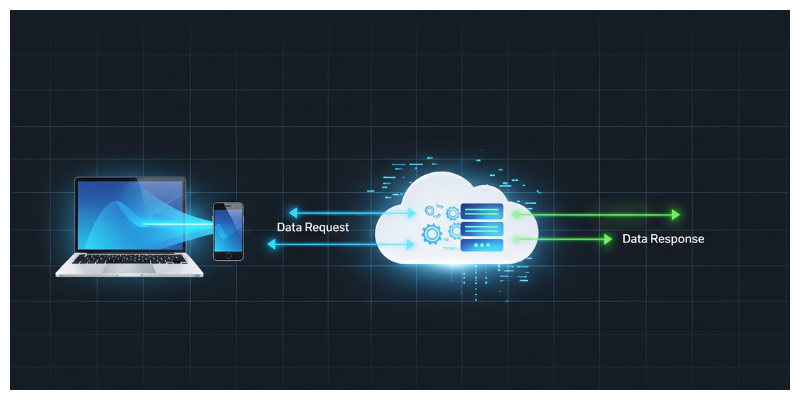
Client-server architecture is one of the most important concepts in full stack development. Regardless of whether you are creating a straightforward blog or a sophisticated web application, understanding how clients and servers interact helps you write better, more efficient code. If you are looking to become a professional in this field, enrolling in a Full Stack Developer Course in Kolkata at FITA Academy offers comprehensive training that covers these fundamentals and prepares you for real-world projects. In this blog, we will break down what client-server architecture means, why it matters, and how it applies to full stack web development.
What is Client-Server Architecture?
Client-server architecture is a design pattern used in networked applications. It separates the system into two main components: the client, which requests data or services, and the server, which processes those requests and sends back responses.
In simple terms, the client is the user-facing side of an application. It is what users interact with in their browsers or mobile apps. The server is where the logic, data processing, and database operations happen. Both parts work together to deliver a seamless experience to the end user.
How It Works in Full Stack Development
In full stack development, you manage both the front end and the back end of a web application. On the front end, technologies such as JavaScript, HTML, and CSS are utilized to create the user interface. On the back end, you may use tools such as Node.js, Express, Python, or Java to manage business logic and interact with databases. If you want to master these skills, signing up for a Full Stack Developer Course in Mumbai can offer organized learning and hands-on experience to become a skilled developer.
The front end makes a request to the server when a user clicks a button or fills out a form. This request is usually made through an API (Application Programming Interface). The server receives the request, processes it, interacts with the database if needed, and sends the appropriate response back to the client. The client then updates the user interface based on that response.
Why is Client-Server Architecture Important?
This architecture is essential because it separates responsibilities between the front end and the back end. This separation allows developers to work on different parts of an application independently. It also improves scalability, maintainability, and security.
From a performance perspective, the server can handle many requests from multiple clients at the same time. On the other hand, the client can focus on delivering a fast and interactive experience without being slowed down by server-side operations. Enrolling in a Full Stack Developer Course in Pune can help you develop the abilities required to efficiently enhance client and server performance by giving you a thorough understanding of these ideas.
Real-World Example in a Full Stack Project
Imagine you are building an e-commerce website. Users can browse products, add items to their carts, and place orders on the client side. When a customer selects “Buy Now,” the client asks the server to handle the payment and save the order information.
After verifying the information and updating the database, the server sends the client a confirmation message. The client then shows a thank-you message to the user. Throughout this process, the client-server communication is what keeps the application functioning smoothly.
Benefits for Full Stack Developers
Understanding client-server architecture helps full stack developers build more efficient applications. If you are aiming to enhance your skills in this area, joining a Full Stack Developer Course in Gurgaon can provide the practical knowledge and training you need. Here are a few reasons why:
- Better Code Organization: Knowing what belongs on the client and what belongs on the server helps you structure your code more effectively.
- Improved Debugging: When something goes wrong, it’s easier to identify whether the issue is on the front end or the back end.
- Enhanced Collaboration: If you’re working in a team, having a clear division between client and server code allows front-end and back-end developers to work in parallel.
Client-server architecture is a fundamental concept that every full stack developer should understand. It creates a clear structure for how data flows within an application and allows for better performance and maintainability. As you build more complex web applications, having a solid grasp of how the client and server interact will help you develop scalable and user-friendly solutions.
Whether you are just starting out or already building full stack projects, make sure this architecture is part of your core knowledge. A Full Stack Developer Course in Ahmedabad can help you strengthen your understanding of these fundamentals. It forms the foundation for everything from simple websites to enterprise-level web applications.
Also check: Monorepos in Full Stack Development